What does Canadian History look like? A Peek Inside the Canadian Historical Association

This essay was originally posted on ActiveHistory.ca in June 2013

Over the past few months Canadians have spent an unusually significant amount of time discussing how our history is told. Following significant cutbacks at our key national historical institutions (Library and Archives CanadaParks Canada, and the Museum of Civilization) and the announcement of targeted government-led history projects (such as the new Canadian Museum of History and the Standing Committee on Canadian Heritage’s Study of Significant Aspects in Canadian History), the study of our history has re-emerged as a subject for heated debate. Amidst much discussion, historians and politicians have made fairly broad statements about the state of historical research in Canada. All of which leads to the question: In 2013, what does Canadian history look like?

Today, hundreds of historians are descending upon the University of Victoria for the Canadian Historical Association‘s annual meeting (the CHA). This is the pre-eminent gathering of professional historians in the country. Over the next three days, a mix of junior and senior scholars will discuss local and regional issues as well as broader international subjects and more methodological concerns. Historians will celebrate our successes and share new directions in our research.

The CHA is perhaps the best place to assess the discipline as a whole. Continue reading “What does Canadian History look like? A Peek Inside the Canadian Historical Association”

An Open Letter to the Prime Minister: Canada’s Policy on Syria

I decided to post this letter online, in addition to sending it to the addressees and my local MP, for three reasons. First, I had hoped to cc the Conservative Party Campaign, but have discovered that it is difficult to find specific e-mail addresses. Second, arguments that reflect on the refugee crisis and military intervention in Syria are not made as frequently as I would like, often remaining as isolated news items. Third, I think it is important that at times like these it be clear the type of information the government is receiving from everyday citizens. It is much harder to make political fodder out of the words of everyday citizens if they are publicly available. 

Dear Prime Minister Harper and Minister Alexander,

I write this letter with deep concern about Canada’s policies related to refugees and military intervention. Over the past week, many Canadians have come to recognize the gravity of the refugee crisis in the Middle East and Europe. I have tried to understand your perspective on this issue and appreciate your desire to address the root causes. There are, however, three reasons that I cannot support your policies. It is my hope in writing this letter, that you will have a change of heart, following previous Conservative governments by opening Canada’s doors at this time of great need.

  1. Military intervention risks compounding the refugee crisis. This week all of our hearts were touched by the image of little Aylan Kurdi lying on that beach in Turkey. I appreciate that you do not think that our policies should be changed in the face of images like this. I want to draw your attention, however, to the fact that Canada’s coalition partners have been actively bombing Kurdi’s home city of Kobani for at least a year. I ask you to imagine your children living in this city when they were young, would these air strikes not also compel you to leave? Playing an active role in this conflict requires that we also deal with the consequences of our actions by opening our doors to those displaced by our own violence.
  1. Military intervention risks civilian casualties. Though every effort is taken to avoid civilian deaths in these bombing campaigns, images of the destruction alone demonstrate that this cannot always be possible. Indeed, one organization, Airwars, claims that since our bombing campaign began between 536 and 718 civilians have been killed. Just three days ago we learned that as many as 27 Iraqi civilians had been killed by a Canadian airstrike. In addition to the death of these men, women and children, what concerns me about this account is that the Pentagon has called into question our oversight measures. Given that we apparently have a “no-civilian-casualty policy,” you can imagine that both these deaths and our military’s failure to adequately investigate are highly alarming, especially in light of your focus on continued military involvement in this conflict. At the very least our involvement in these incidents, and the role that they may play in encouraging someone to abandon their home, should encourage us to create more generous refugee policies.
  1. Recent changes to Canada’s refugee policies need to be rescinded. Although I appreciate that you think your refugee related policies are strong and that we need to stay the course, many Canadians have been deeply concerned about this area of public policy for years now. In addition to citizen protests and letters, which are longstanding, last year the Federal Court of Canada ruled that your government’s policy of denying refugees health care amounted to “cruel and unusual treatment or punishment” under the Canadian Charter of Rights and Freedoms. It is unclear to me why then Minister Alexander, rather than taking this critique to heart, decided to openly appeal the case. Clearly, given the damning moral implications of this court ruling, a change in policy is necessary.

I trust that when laid out like this, you can see why I have concerns with your government’s leadership on this issue. In the face of this mounting crisis, Mr. Prime Minister, I am asking you to take a leadership role by following your predecessor Prime Minister Joe Clark when he welcomed the Vietnamese boat people. Please open Canada’s door to significantly more refugees at this time of pressing need. Furthermore, in the wake of Minister Alexander’s embarrassing performance on this front, especially in regards to refugee health care and most recently – on Wednesday – in his interview with Rosemary Barton on CBC’s Power and Politics, it is fitting for this minister to step down from his office. I ask that if the minister is unable to arrive at this decision himself, that your office be moved to encourage him in this direction.

Mr. Prime Minister, though we are in the midst of an election, you remain the leader of this country. In that capacity, you still have the power to make an important intervention in this crisis. You have the ability to make sure that the right people are in the right place to make the right decision. In sending this letter, I hope that you will begin to surround yourself with people who can think a little more deeply than the us versus them approach your government has taken on this issue. Though I do not support your emphasis on military intervention, you are right that this situation requires more than just the welcoming to Canada of large numbers of refugees, but additional action need not encumber such a policy. The time of need is now and your action must be urgent and swift.

Thank you

Thomas Peace

London, Ontario

Sources cited in this letter:

History Wars: Terms of debate

This post originally appeared on ActiveHistory.ca

Last month, Terry Glavin wrote a syndicated op-ed piece that appeared in The Ottawa Citizen and Vancouver’s The Province, delivering a strongly worded dismissal of the historical profession in Canada. Historians and others have responded elsewhere to his indictment of the profession (see herehere and here). Today, I want to respond to the broader ideas that inform his argument.

Glavin’s essay mostly parrots a series of arguments that have been lobbed at historians since the profession began to change its focus in the 1970s and 1980s. These ideas are quite resilient. Despite their regular application (mostly in the media), his accusations are neither fair nor reflective of current historical practice and broader professional interpretations of Canada’s past. More importantly, their use is a distraction from the key issues at stake. Continue reading “History Wars: Terms of debate”

2013: It’s time to commemorate the 1763 Royal Proclamation

This post originally appeared on ActiveHistory.ca.


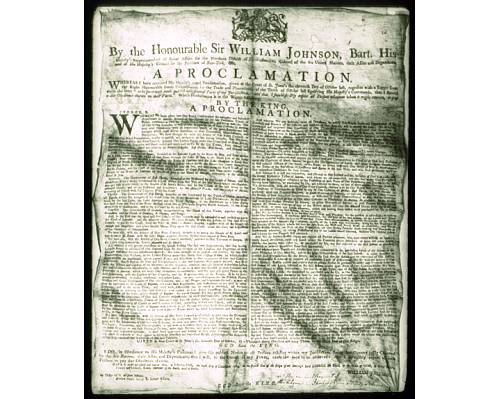
Royal ProcNDP Leader Thomas Mulcair made a good suggestion last week.  After the Prime Minister publicly outlined the marching orders for his ministers – which did not address recent tensions with First Nations but did emphasize the allocation of funds and resources towards a handful of historical celebrations – Mulcair took him to task. Picking up perhaps on the contradiction of funding historical celebrations while systematically gutting Library and Archives Canada and Parks Canada (two key institutions that preserve Canada’s documentary and material heritage), Mulcair gilled the Prime Minister on his political use of the past. Rather than throwing the baby out with the bath water, however, Mulcair suggests that perhaps the Prime Minister expand his commemorative agenda. Why not celebrate the 250th anniversary of the 1763 Royal Proclamation this year?

I agree with Mulcair. The Harper government should embrace the Royal Proclamation. Not only is it a foundational – one might even say constitutional – document in Canada’s legal history, it also provides the Prime Minister with an opportunity to demonstrate his apparent concern for First Nations’ priorities.  The Royal Proclamation has all the trappings of a Harperesque vision of the past. It draws together the military, monarchy and a firm spirit of law and order.

I don’t think Mulcair went far enough in his indictment, however. It’s not just Stephen Harper (and his cabinet) ignoring the Proclamation. It’s all of us. Continue reading “2013: It’s time to commemorate the 1763 Royal Proclamation”

Ten Books to Contextualize #IdleNoMore

This post originally appeared on ActiveHistory.ca and generated a considerable number of additional suggestions.  The original post is worth a visit.

By Andrew Watson and Thomas Peace

After reading comment after uninformed comment, both online and in the media, ActiveHistory.ca decided to compile a short list of books written by historians that address the issues being discussed by the Idle No More movement.  Click on a link below to read a brief summary of the book.

Peggy Blair, Lament for a First Nation
Jarvis Browlie, A Fatherly Eye
Shelagh Grant, Arctic Justice
Cole Harris, Making Native Space
Douglas Harris, Fish, Law and Colonialism
J.R. Miller, Compact, Contract, Covenant
Jocelyn Thorpe, Temagami’s Tangled Wild
Treaty Seven Elders and Tribal Council, The True Spirit and Original Intent of Treaty 7
William C. Wicken, Mi’kmaq Treaties on Trial
Michael Witgen, An Infinity of Nations

In addition to these books, we would also like to direct your attention to the Canada in the Making‘s section on “Aboriginals: Treaties & Relations.”  This website provides an overview of the relationship between European empires, the Canadian state and First Nation peoples from the late-fifteenth century to the present. It includes links to online copies of many foundational – and constitutional – documents underpinning Canada’s relationship with First Nation peoples. Continue reading “Ten Books to Contextualize #IdleNoMore”

The History Wars: Where is the media?

This post originally appeared on ActiveHistory.ca

Last week the Globe and Mail published an editorial about the video game Assassins Creed III . According to the Globe’s editors, the video game distorts the history of the American War of Independence by suggesting that native people (the protagonist, Ratonhnhaké:ton, is Mohawk) fought alongside the rebelling colonies.  Both gamers and historians quickly and resoundingly condemnedthe Globe‘s opinion as factually flawed (see here, here, and my own letter to the editor, here, for a sample of the critiques). I don’t want to rehash these critiques here. Instead, I want to ask some more pointed questions about why the Globe decided to run this piece in the first place.

It’s not everyday that a national newspaper decides to pick on an individual business over the quality of its product. Continue reading “The History Wars: Where is the media?”

Creating an Environment that Supports Diversity

This post originally appeared on Teaching the Past

A couple of weeks ago I was discussing teaching Aboriginal history with a colleague.  We had both heard stories from some Aboriginal students who at some point in their education had heard their people discussed in the high school and university classroom in a derogatory manner. Aside from the sad news that racism is still alive and well in some of our classrooms, the person with whom I had a conversation – someone with much more teaching experience than I – emphasized that often these concerns are not directly addressed with the teacher and professor. Continue reading “Creating an Environment that Supports Diversity”

Learning from the Swollen Rivers of the Past

This post originally appeared on ActiveHistory.ca

I may be cursed. Everywhere I move flooding seems to follow. Last fall, my family and I moved to White River Junction, Vermont. On an apartment hunt, my father and I arrived in the Green Mountain State immediately following Hurricane Irene. Pulling into Rutland we were told that there were no roads open that crossed the state east to west. Every road had been washed out. Indeed, the devastation Irene caused was still a lead news story in the area when we left at the beginning of August, a year later. We arrived in Nova Scotia to some dry weather, but here too we’ve seen one of the wettest September’s on record. One of these weather systems, associated with Tropical Storm Leslie, broke through a number of dykes around Truro, bringing significant flooding to Nova Scotia’s “Hub Town.”

There are a lot of differences between these two “weather events,” not the least of which was their scale and damage. What links them together, though, is that in both cases similar flooding had taken place in the past. Although these events are tragedies, much of the damage was predictable, though not always avoidable. Continue reading “Learning from the Swollen Rivers of the Past”

Teaching Early-Canadian History with Objects and Collections

This piece was originally posted to THEN/HiER’s blog ‘Teaching the Past

This month Kate Zankowicz, the editor of Teaching the Past, has asked all of the blog’s regular contributors to write about learning from objects and collections.  Over the past week I debated what I could contribute to this topic. I thought about drawing attention to Ian Mosby’s wonderful piece on ActiveHistory.ca about reading cookbooks as life stories, where he hints at using the cookbook as both text and artifact. I then considered sharing my most memorable experience with an artifact – if that’s the proper term – when I came across the finger nails, skin and hair from Alexander Taché, the first archbishop of Manitoba, in an otherwise non-descript box of documents in a Quebec archive.  But then, as I prepared for a class this week on Aboriginal responses to the arrival of Europeans, which draws heavily on the work of archaeologists, I realized that it might be helpful to use this post as an opportunity to consolidate and share some of the resources and collections that I have found useful in teaching early-Canadian history. Continue reading “Teaching Early-Canadian History with Objects and Collections”

Colonialism and the Words We Choose: Lessons from Museum and Academy

This post was originally published on ActiveHistory.ca

About two months ago I was in a local museum with my family learning about the eighteenth century history of the community in which the museum was located. In many ways we had a typical country museum experience. We were met by costumed interpreters and told the stories of the building and the people who lived there. Then we learned about some of the broader historical context. For our guide, the story this museum told hinged on the European settlement of the “savage wilderness inhabited only by Indians.”

As a historian who studies Native communities during the eighteenth century in the places best-known today as Quebec, New England and Maritime Canada, I felt that I had been transported to a different era. Though wilderness remains pervasive, isn’t the noun savage an artifact from an earlier century? And don’t Native people have a history that predates their encounter with Europeans? Continue reading “Colonialism and the Words We Choose: Lessons from Museum and Academy”

In the beginning there was… Canada?!?

Canada Day, 1967

This post originally appeared on ActiveHistory.ca

This is my favourite time of the year to be in Quebec City. With the school year drawing to a close, a seemingly endless train of tour buses bear down on the city. Ontario’s youth are here to learn about Canada’s roots in the berceau of the nation. Our story starts here… or at least so the tale goes. Sitting at my hotel-room desk in Quebec – straddled between two days of national celebration – I can’t help but consider the stories we use to describe who we are and where we have been as a country. Continue reading “In the beginning there was… Canada?!?”

An Open Letter to James Moore and Daniel Caron

Recently the Government of Canada and the management at Library and Archives Canada have made a number of changes to how Canada’s national library and archives operate.  Many of these changes are a great concern to historians, librarians and archivists.  I have decided to post a letter that I wrote earlier this week to the Minister of Canadian Heritage, James Moore, and Canada’s national librarian and archivist, Daniel Caron, in order to emphasize what I see as some of the key problems with the recent decisions that their institutions have made. Continue reading “An Open Letter to James Moore and Daniel Caron”

Aboriginal History in Ontario’s Cottage Country

This was originally published on ActiveHistory.ca

LAC DAPDCAP97038 MIKAN No. 3192578Frequently, when I am ‘up north’ and discussing my research on northeastern Aboriginal peoples during the seventeenth and eighteenth centuries, I am asked one of two questions:  Why were there no Aboriginal people living here?  Or, what happened to the Aboriginal people who were here?

The questions are good ones, and reflect the absence of Aboriginal people from general discussion of Muskoka’s (and much of cottage country’s) past.  Though it is changing, many of cottage country’s local museums, community websites and history books focus on the arrival of Europeans and creation of the towns with which we are familiar today, leaving the discussion of Native people to a short handful of sentences to mark what took place before Europeans arrived.  Aside from Bruce Hodgson and Jamie Benidickson’s The Temagami Experience, which doesn’t exactly focus on the heart of cottage country, and Patricia Blair’s Lament for a First Nation, there are few scholarly monographs or articles that address Aboriginal people in central Ontario.  Like in many places across Canada, history in this part of Ontario is told as a veritable clear-cutting of the past where Aboriginal people were replaced by the lumber industry and subsequent European settlement of the region. Continue reading “Aboriginal History in Ontario’s Cottage Country”

Remembering, Forgetting and the Stories We Tell

This was originally posted on Teaching the Past

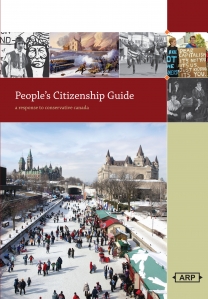
Last week, as I was writing a review of Adele Perry’s and Esyllt Jones’s recently released People’s Citizenship Guide, an article in The Washington Post caught my eye.

Afghanistan is about to launch a new public school history curriculum aimed at building peace and unity.  In an effort to build national unity, the new curriculum will only discuss events leading up to 1973.  Afghan students will not learn about the divisive subjects of Communism and the Soviet War, the Mujahedeen, the Taliban or the past decade of the American-led War on Terror.

As a historian, I generally disagree with attempts to avoid teaching controversial subjects. The high stakes involved in this decision, however, caused me to pause and reflect on the review exercise in which I was engaged.

The People’s Citizenship Guide is a direct response to the Government of Canada’s controversial Discover Canada: The Rights and Responsibilities of Citizenship.  Jones and Perry’s book closely parallels the government guide.  It is about the same length, it addresses the same subject matter, and seeks to serve a similar purpose – informing Canadians (and soon-to-be Canadians) of the country’s past and present situation.  Continue reading “Remembering, Forgetting and the Stories We Tell”

The People’s Citizenship Guide

Originally posted to ActiveHistory.ca

Tonight, at McNally Robinson [please click for event information] in Winnipeg, The People’s Citizenship Guide: A Response to Conservative Canada will be launched.  This short 80-page book is a direct response to Citizenship and Immigration Canada’s Discover Canada: The Rights and Responsibilities of Citizenship, which has been widely critiqued for its restrictive and overly-politicized definition of Canadian identity (for examples or critiques see the Globe and Mail, Andrew Smith’s blog, my summary of initial reactions on AH.ca, Ian McKay’s podcast on the right-wing reconception of Canada). As in the official immigration guide, The People’s Citizenship Guide’s editors, historians Esyllt Jones and Adele Perry, have brought together a diverse group of scholars in order to succinctly reflect on the nature of Canadian citizenship and modern-day Canada. Continue reading “The People’s Citizenship Guide”

Music as a Gateway to Understanding Historical Practice

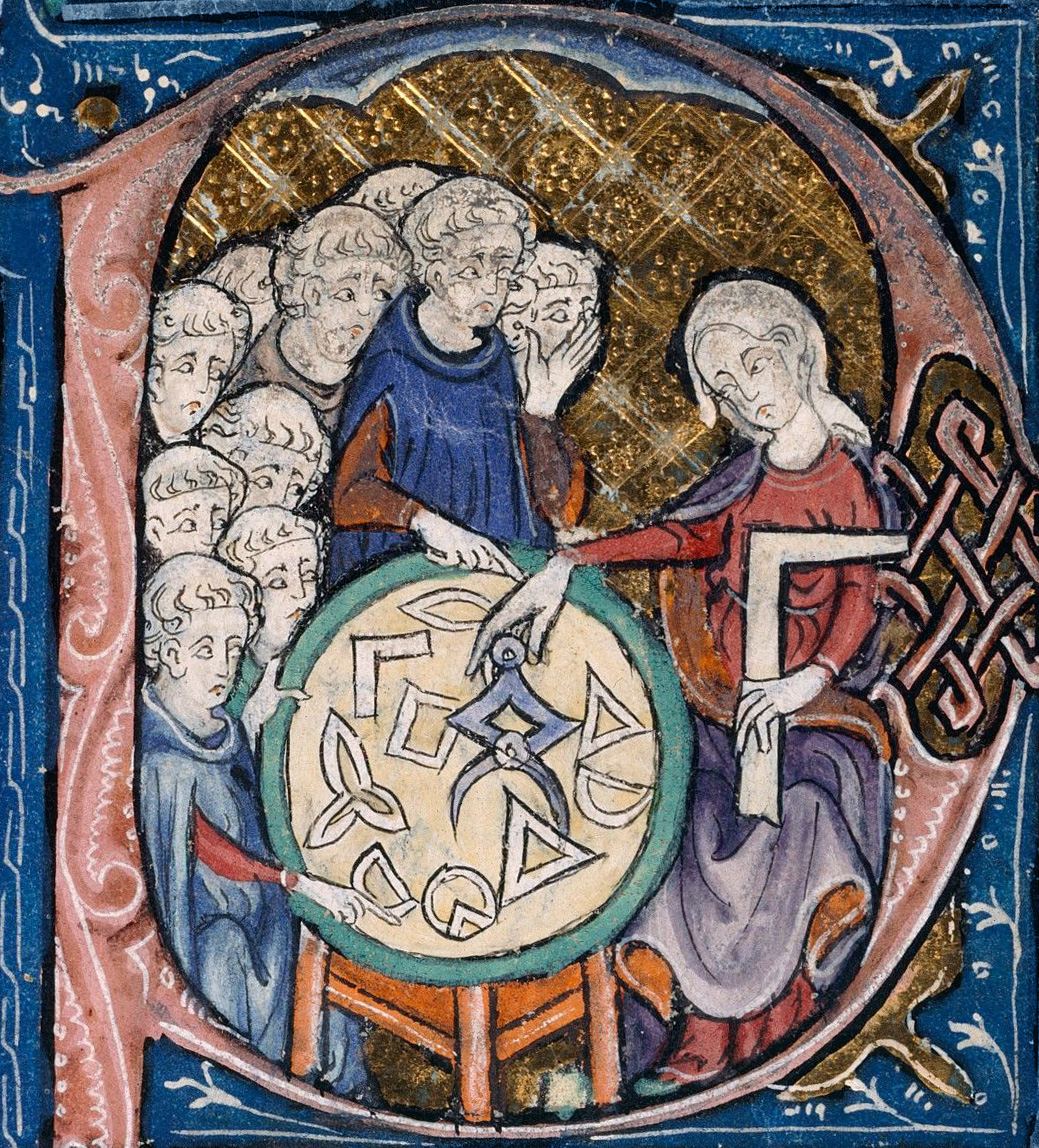
By Matenadaran [Public domain], via Wikimedia Commons

This piece was originally published on ActiveHistory.ca.

In the mid-1990s, the music of the Wakami Wailers set me on the path to becoming a historian.  Singing the old songs from eastern Canada’s nineteenth-century lumber shanties, this group of former Ontario Parks workers instilled in me a sense of the past and its importance for understanding present realities.  By connecting some of Ontario’s premier provincial parks and province’s lumber industry, the Wailers encouraged me to consider the complex interconnection between logging and recreation in central Ontario (i.e. Muskoka and Algonquin Park).

I have come to realize over the decade and a half since I first discovered the Wailers that popular music can serve as a useful entry point for understanding the past.  This should not come as a surprise.  Approaches to teaching and learning, such as John Bigg’s SOLO taxonomy, emphasize the importance of understanding foundational concepts before higher order thinking can take place.  Popular culture serves as an easy way to establish these concepts by capitalizing on students’ everyday experience.

Music can be used to teach about the past in at least seven overlapping ways (feel free to add other categories and examples in the comments section): Continue reading “Music as a Gateway to Understanding Historical Practice”

Power and the Questions We Ask about History Education

This was originally posted on Teaching the Past.

Last month on this blog, Samantha Cutrara asked a challenging question that gets to the fundamentals of history education.  Who, she asks, is history education for?  This question is more complex than it seems, because, depending on the answer, it has a variety of implications for historians and history educators.  Implicit in this question is a set of power relations that often remain undisclosed in discussions about history and how it is taught.  By probing the implications that develop from the question of ‘who history is for’, it becomes apparent that we must ask a more basic question that helps us better understand the uses and abuses of the past. What do we mean by history education? Continue reading “Power and the Questions We Ask about History Education”

A Reluctant Engagement: Mi’kmaw-European Interaction along the Annapolis River at the Beginning of the Eighteenth Century

I am giving the following presentation at 7 p.m. on Tuesday evening January 3, 2012 in the Lower Hall of St. George & St. Andrew United Church in Annapolis Royal, Nova Scotia.

Pierre du Gua, the sieur de Mons, and Samuel de Champlain chose to build their small French outpost along the Annapolis River because of a nearby (and friendly) Mi’kmaw community.  But, aside from the first few years of settlement, Europeans did not record much about the specific group of people who lived along the river’s banks during the seventeenth and eighteenth centuries.  Although there is little source material remaining from this period, the British conquest of Port Royal provides an important opportunity to gain insight about this local Mi’kmaw population.  Developing from his PhD research on Aboriginal experiences of the conquest of New France, Thomas Peace will share his work on the Kespukwitk Mi’kmaq at the turn of the eighteenth century.  His presentation will use census data and local parish records to compare local Mi’kmaw experiences to those elsewhere in peninsular Mi’kma’ki (modern-day Nova Scotia), expanding our understanding of Mi’kmaw interaction with European officials and Acadian settlers.

What can the past teach us about First Nations Education?

This was originally posted on Teaching the Past.

Edited digital image from Library of Congress, LC-USZ62-3924 (b&w film copy neg.) Lithograph of Stodart & Currier, N.Y. published by B.O. Tyler, [1834 or 1835]. See Currier & Ives : a catalogue raisonné / compiled by Gale Research. Detroit, MI : Gale Research, c1983, no. 1571. http://lcweb2.loc.gov/cgi-bin/query/i?pp/PPALL:@field(NUMBER+@band(cph+3a07365))
Dartmouth College
The Canadian press has recently been replete with stories and op-ed pieces covering the National Panel on First Nation Elementary and Secondary Education, which this month wrapped up a series of roundtable discussions.  The panel, created through a partnership between the Canadian federal government and the Assembly of First Nations, has a mandate to develop options and to suggest legislation for improving on-reserve education across the country.

Inequitable funding for band-operated schools in many First Nations communities has created a crisis.  Despite education being a treaty right for many First Nations, the panel notes that “fewer than half of First Nation youth graduate from high school, compared to close to 80 per cent of other Canadian children, and some 70 per cent do not have a post secondary degree or diploma.”

As an historian of the eighteenth century studying Aboriginal engagement with European forms of higher education, these numbers startled me. In much of my research these figures are reversed.
Continue reading “What can the past teach us about First Nations Education?”

Museum Closures, Heritage and Cultivating a Sense of Place in Toronto

This piece was originally published on ActiveHistory.ca.

“Places possess a marked capacity for triggering acts of self-reflection, inspiring thoughts about who one presently is, or memories of who one used to be, or musings on who one might become… When places are actively sensed, the physical landscape becomes wedded to the landscape of the mind, to the roving imagination, and where the latter may lead is anybody’s guess.” – Keith Basso, Wisdom Sits in Places, 107.

Just as I read these words last week, the Toronto Star disclosed municipal plans to close three of the City of Toronto’s ten museums.  Montgomery’s InnGibson House and the Zion School House – museums outside of the downtown core and closely allied with the Etobicoke and North York Historical societies – are on the chopping block due to municipal cutbacks.  This decision builds on the recently announced closure of the Air and Space Museum at Downsview Park, one of a few other museums in the north end of the city.

In an age of austerity, as Sean Kheraj noted last week, all public institutions supporting culture and heritage are vulnerable. But these cuts do not just reflect cutbacks in the culture and heritage sectors. In a city already bereft of recognized historical sites outside of the downtown core, this municipal decision reinforces urban and suburban differences in how Toronto’s past is told. If places have the power to shape our self-perception and how we situate ourselves in the world, as Basso and others have suggested, how has the uneven distribution of historical places influenced the culture and politics of Canada’s largest city? Continue reading “Museum Closures, Heritage and Cultivating a Sense of Place in Toronto”

Historical Quests: An intergenerational tool for connecting school and community

This piece was originally posted on Teaching the Past.

Whether we have an informed view of the past or not, an understanding of history is an important part of how we situate and re-evaluate our position in local, regional, national and international contexts.  Because the past is so important to connecting and situating ourselves to others and the places where we live, it cannot be taught entirely from the classroom.  History, I believe, is best taught collectively and collaboratively, with lessons that anchor into a student’s everyday experience and understanding of the past.

This point was driven home last week when my family and I – looking to better understand our new home in the upper Connecticut Valley – participated in a historical walk in the nearby community of Hartford Vermont.  The walk was one of over 150 Valley Quests, a place-based educational program devoted to building community in the Upper Valley.  Like many historical walks, this quest was led by a local resident who provided details about the community’s history, geography and everyday life.  Unlike other historical walks that I have been on, however, the Valley Quest also integrates local schools and encourages regular public participation. Continue reading “Historical Quests: An intergenerational tool for connecting school and community”

The Return of the History Wars

This piece was originally published on ActiveHistory.ca.

Last week a story in Le Devoir caught my attention.  The headline read: ‘Quebec’s history has been left behind by the universities.’  The article reports on a study lamenting the quality and quantity of history-specific training in Quebec universities.  More importantly – and this is what caught my attention – the spokesperson for one of the study’s sponsors, the Coalition for the History of Quebec, argued that the teaching of political and economic history had been subsumed by an over emphasis on social and culture history.  After reading this critique of Quebec’s university history departments, I realized that the so-called ‘History Wars’ are still alive and well in the Canadian public sphere. Continue reading “The Return of the History Wars”

Renaming Schools: A society in dialogue with its past

After a six month hiatus to put the finishing touches on my dissertation and have a baby, I have re-entered the blogosphere.  This appeared on ActiveHistory.ca earlier this week.

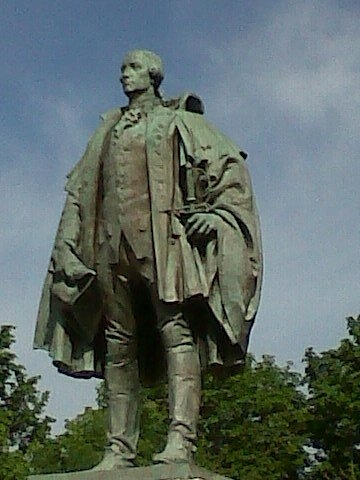
It should come as no surprise that the recent controversy over the renaming of a junior high school erupted in Nova Scotia.  On 22 June 2011, the Halifax Regional School Board voted unanimously to change the name of Cornwallis Junior High.  The school board was concerned about the legacy of Edward Cornwallis, the city’s founder, who in an effort to secure the town site placed a bounty on Mi’kmaq heads.  The board’s decision has caused considerable controversy and according to the media it seems that many people want the school’s name retained.  The changing of the school’s name, however, fits within a long history of name changes in Nova Scotia.  It presents a good opportunity to reflect on the diverse roots that make up Nova Scotia’s population and the province’s relationship with its past.  Renaming landmarks is a sign of a growing and evolving society that is in critical dialogue with its past. Continue reading “Renaming Schools: A society in dialogue with its past”

Are Canadian Universities Academically Adrift?

This piece was originally posted on Teaching the Past

Over the past couple of weeks I have had some really concerning conversations about the state of teaching and learning in Canadian universities.  In one, a colleague of mine – a university instructor – claimed that universities do not have an overall curriculum governing their operation.  In another, a senior educator stated bluntly that students learned little in the average undergraduate program.  Both of these statements took me aback and got me thinking a little more deeply about teaching and learning in the classroom.  Surely universities and individual academic departments have curricula that structures student learning outcomes, I thought.  But to what extent does this govern the content of specific courses and class pedagogies?  And in what ways do we measure what students learn from university programs as a whole? Continue reading “Are Canadian Universities Academically Adrift?”

Building Digital Literacy and the University Curriculum

This post was originally published on ActiveHistory.ca and Teaching the Past.

The digitization of information, and the growing technologies used to manipulate and analyze it, is rapidly changing the context of the classroom. A couple of weeks ago Ian Milligan, one of my fellow editors at ActiveHistory.ca, reported on the growing debate over the use of laptops and other technology (like cell phones) during class time.  Milligan makes a compelling argument for the importance of allowing students the use of their computers in the lecture hall. Although I agree with much of what he has written on the subject, the use of technology in history courses poses a more complicated problem than simply addressing whether it should or should not be used: Where does digital literacy fit in the university curriculum and how should it be taught? Continue reading “Building Digital Literacy and the University Curriculum”