Fake News, Global History Wars, and the Importance of Historical Thinking

This post originally appeared on ActiveHistory.ca in November 2016.

In the last week we’ve seen a strong desire to put an end to “Fake News”. With the rise of social media and increasingly savvy revenue generating fake news sites, this is an important intervention (the dangers of which Alan MacEachern addressed here last week). It is, however, misleading to assign blame for Donald Trump’s rise to the U.S. presidency solely on this blatant deception. Focus on the “fake news” distracts us from the very real way that some producers of the “real news” (editors, producers and pundits) and legitimately elected politicians (and especially governments) use the media to distort and distract in an effort to cultivate public opinion.

Nowhere can this be seen more clearly than in the deliberate (mis)use of history to construct a specific polarized vision of the nation. Globally, politicians and opinion makers (some of whom are admittedly professional historians) have recently turned to un-contextualized facts about their nation’s past for their own political ends, often directly targeting university-based historians and their increasing emphasis on historical thinking over the reinforcement of a national narrative.  Though I am not in a position to argue cause and effect, in this post I would like to suggest that declining enrollments in history programs and classes are perhaps related to the fact that politicians deploying this tactic have recently found electoral success. “Fake news” may be part of the problem, but the problem’s roots go much deeper and relate more directly to established power structures. Continue reading “Fake News, Global History Wars, and the Importance of Historical Thinking”

Acknowledging the Land and the People: A Practice for all Canadian Historians

This post originally appeared on ActiveHistory.ca in July 2016.

Pour assurer notre existence, il faut nous cramponner à la terre, et léguer à nos enfants la langue de nos ancetres et la propriété du sol [1]

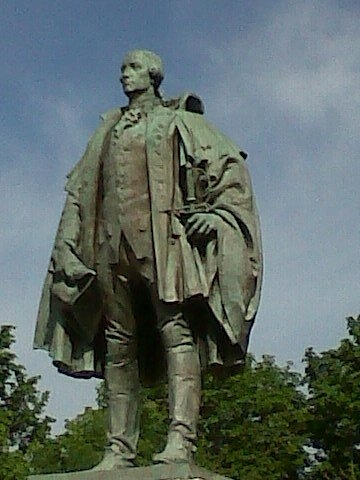
Statue of George-Etienne Cartier in Parc Montmorency (Quebec City)

These words captivated my attention a few months ago as I walked across Parc Montmorency, the site of the old parliament buildings in Quebec City. They are found on the footing of a statue of George-Etienne Cartier, one of the better known politicians involved in crafting the British North America Act. What a succinct summary of Confederation, I thought: “In order to assure our existence, we must grasp onto the Land and leave for our children the language of our ancestors and ownership of the soil.”

The words struck a chord, I think, because I was in the park to eat my lunch and read a bit of Thomas King’s The Truth about Stories, the book Huron has chosen for this year’s first year common reading program. Repeatedly, in returning to the phrase: “the truth about stories is that that’s all we are,” King challenges his audience to think about how we situate ourselves in the world and the stories we use to construct it. The story invoked by this inscription is one of a national beginning. It can be read in at least two ways that both help us understand our present moment as well as point us towards areas where our practice as historians may need to change. Continue reading “Acknowledging the Land and the People: A Practice for all Canadian Historians”

Shuttering Archives: A UNESCO Recognized Collection to Close its Doors to the Public

This post originally appeared on ActiveHistory.ca in June 2016.

Le Séminaire du Québec

Last month I spent two weeks working in one of my favourite archives: Le Centre de référence de l’Amérique francophone. This archive – run by Quebec’s Museum of Civilization – is one of the oldest in the country, not only holding the records of the Quebec Seminary (which begin in 1623), but also many important documents related to New France and the early relationship between the diverse peoples of northeastern North America, the French Empire and the Catholic church. The archive holds unique Indigenous language documents and is critical for anyone interested in understanding Canada’s early history. With the Centre located in the seminary buildings themselves, the archive remains more or less in situ since the French regime (bearing in mind that the complex has expanded considerably over the intervening centuries). It is these qualities that led to the collection’s 2007 registration in UNESCO’s Memory of the World Program; a recognition closely linked to Quebec City’s own place on UNESCO’s World Heritage list.

Letters patents of the king for the establishment of the Séminaire de Québec, 1663

It came as a shock then that upon my arrival at the Centre in early May I learned from the reference archivist that this might be my final visit to this important archival collection. On 23 June this archive is scheduled to close for an indefinite amount of time as the Museum of Civilization struggles to meet its budgetary needs. Continue reading “Shuttering Archives: A UNESCO Recognized Collection to Close its Doors to the Public”

What does Canadian history look like? Active History at the 2016 CHA

This post was originally written with Daniel Ross and posted on ActiveHistory.ca in May 2016.

Keywords from the 2016 CHA Program

This weekend, historians from across the country will gather in Calgary for the annual meeting of the Canadian Historical Association (CHA). It’s one of the few opportunities for Canadian historians and historians of Canada to connect in person, share their most recent research, and discuss larger issues facing the profession. Many attendees also take advantage of the chance to learn firsthand about the history of an unfamiliar city or region and its communities. 

Since 2013, we’ve been using a couple of metrics – mainly word counts and chronological markers in paper and panel titles – to provide an overview of what attendees are working on and talking about. There’s nothing particularly rigorous about our methods, but previous posts (201320142015) have provided a starting point for discussions about what Canadian history looks like today, and how that profile has changed over time. 

As always, this year’s line-up speaks to the breadth and creativity of historical work being done in Canada.  Continue reading “What does Canadian history look like? Active History at the 2016 CHA”

Recognizing THEN/HiER

This post originally appeared on ActiveHistory.ca in March 2016.

I first encountered the History Education Network (THEN/HiER) in late 2009, when Jennifer Bonnell, the graduate student coordinator at the time, approached Active History about the potential for coordinating a workshop series in Toronto focused on teaching history. Over the intervening months we worked together towards the first in a series of events that brought together teachers, curators, professors and civil servants known as Approaching the Past. This was the beginning of a six-year partnership between Active History and THEN/HiER. At the end of the month, THEN/HiER’s mandate will draw to a close. I want to use this post to draw attention to our collaboration, some of its key moments, and the influence that Anne Marie Goodfellow, Jennifer Bonnell, Penney Clark and many others have had on ActiveHistory.ca and the Active History project more generally.

Logos Continue reading “Recognizing THEN/HiER”

History Wars: Terms of debate

This post originally appeared on ActiveHistory.ca

Last month, Terry Glavin wrote a syndicated op-ed piece that appeared in The Ottawa Citizen and Vancouver’s The Province, delivering a strongly worded dismissal of the historical profession in Canada. Historians and others have responded elsewhere to his indictment of the profession (see herehere and here). Today, I want to respond to the broader ideas that inform his argument.

Glavin’s essay mostly parrots a series of arguments that have been lobbed at historians since the profession began to change its focus in the 1970s and 1980s. These ideas are quite resilient. Despite their regular application (mostly in the media), his accusations are neither fair nor reflective of current historical practice and broader professional interpretations of Canada’s past. More importantly, their use is a distraction from the key issues at stake. Continue reading “History Wars: Terms of debate”

2013: It’s time to commemorate the 1763 Royal Proclamation

This post originally appeared on ActiveHistory.ca.


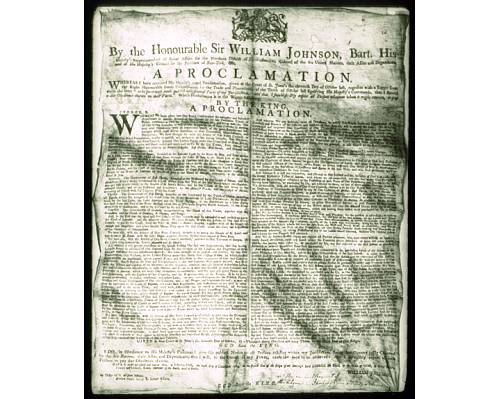
Royal ProcNDP Leader Thomas Mulcair made a good suggestion last week.  After the Prime Minister publicly outlined the marching orders for his ministers – which did not address recent tensions with First Nations but did emphasize the allocation of funds and resources towards a handful of historical celebrations – Mulcair took him to task. Picking up perhaps on the contradiction of funding historical celebrations while systematically gutting Library and Archives Canada and Parks Canada (two key institutions that preserve Canada’s documentary and material heritage), Mulcair gilled the Prime Minister on his political use of the past. Rather than throwing the baby out with the bath water, however, Mulcair suggests that perhaps the Prime Minister expand his commemorative agenda. Why not celebrate the 250th anniversary of the 1763 Royal Proclamation this year?

I agree with Mulcair. The Harper government should embrace the Royal Proclamation. Not only is it a foundational – one might even say constitutional – document in Canada’s legal history, it also provides the Prime Minister with an opportunity to demonstrate his apparent concern for First Nations’ priorities.  The Royal Proclamation has all the trappings of a Harperesque vision of the past. It draws together the military, monarchy and a firm spirit of law and order.

I don’t think Mulcair went far enough in his indictment, however. It’s not just Stephen Harper (and his cabinet) ignoring the Proclamation. It’s all of us. Continue reading “2013: It’s time to commemorate the 1763 Royal Proclamation”

Ten Books to Contextualize #IdleNoMore

This post originally appeared on ActiveHistory.ca and generated a considerable number of additional suggestions.  The original post is worth a visit.

By Andrew Watson and Thomas Peace

After reading comment after uninformed comment, both online and in the media, ActiveHistory.ca decided to compile a short list of books written by historians that address the issues being discussed by the Idle No More movement.  Click on a link below to read a brief summary of the book.

Peggy Blair, Lament for a First Nation
Jarvis Browlie, A Fatherly Eye
Shelagh Grant, Arctic Justice
Cole Harris, Making Native Space
Douglas Harris, Fish, Law and Colonialism
J.R. Miller, Compact, Contract, Covenant
Jocelyn Thorpe, Temagami’s Tangled Wild
Treaty Seven Elders and Tribal Council, The True Spirit and Original Intent of Treaty 7
William C. Wicken, Mi’kmaq Treaties on Trial
Michael Witgen, An Infinity of Nations

In addition to these books, we would also like to direct your attention to the Canada in the Making‘s section on “Aboriginals: Treaties & Relations.”  This website provides an overview of the relationship between European empires, the Canadian state and First Nation peoples from the late-fifteenth century to the present. It includes links to online copies of many foundational – and constitutional – documents underpinning Canada’s relationship with First Nation peoples. Continue reading “Ten Books to Contextualize #IdleNoMore”

The History Wars: Where is the media?

This post originally appeared on ActiveHistory.ca

Last week the Globe and Mail published an editorial about the video game Assassins Creed III . According to the Globe’s editors, the video game distorts the history of the American War of Independence by suggesting that native people (the protagonist, Ratonhnhaké:ton, is Mohawk) fought alongside the rebelling colonies.  Both gamers and historians quickly and resoundingly condemnedthe Globe‘s opinion as factually flawed (see here, here, and my own letter to the editor, here, for a sample of the critiques). I don’t want to rehash these critiques here. Instead, I want to ask some more pointed questions about why the Globe decided to run this piece in the first place.

It’s not everyday that a national newspaper decides to pick on an individual business over the quality of its product. Continue reading “The History Wars: Where is the media?”

Learning from the Swollen Rivers of the Past

This post originally appeared on ActiveHistory.ca

I may be cursed. Everywhere I move flooding seems to follow. Last fall, my family and I moved to White River Junction, Vermont. On an apartment hunt, my father and I arrived in the Green Mountain State immediately following Hurricane Irene. Pulling into Rutland we were told that there were no roads open that crossed the state east to west. Every road had been washed out. Indeed, the devastation Irene caused was still a lead news story in the area when we left at the beginning of August, a year later. We arrived in Nova Scotia to some dry weather, but here too we’ve seen one of the wettest September’s on record. One of these weather systems, associated with Tropical Storm Leslie, broke through a number of dykes around Truro, bringing significant flooding to Nova Scotia’s “Hub Town.”

There are a lot of differences between these two “weather events,” not the least of which was their scale and damage. What links them together, though, is that in both cases similar flooding had taken place in the past. Although these events are tragedies, much of the damage was predictable, though not always avoidable. Continue reading “Learning from the Swollen Rivers of the Past”

Colonialism and the Words We Choose: Lessons from Museum and Academy

This post was originally published on ActiveHistory.ca

About two months ago I was in a local museum with my family learning about the eighteenth century history of the community in which the museum was located. In many ways we had a typical country museum experience. We were met by costumed interpreters and told the stories of the building and the people who lived there. Then we learned about some of the broader historical context. For our guide, the story this museum told hinged on the European settlement of the “savage wilderness inhabited only by Indians.”

As a historian who studies Native communities during the eighteenth century in the places best-known today as Quebec, New England and Maritime Canada, I felt that I had been transported to a different era. Though wilderness remains pervasive, isn’t the noun savage an artifact from an earlier century? And don’t Native people have a history that predates their encounter with Europeans? Continue reading “Colonialism and the Words We Choose: Lessons from Museum and Academy”

In the beginning there was… Canada?!?

Canada Day, 1967

This post originally appeared on ActiveHistory.ca

This is my favourite time of the year to be in Quebec City. With the school year drawing to a close, a seemingly endless train of tour buses bear down on the city. Ontario’s youth are here to learn about Canada’s roots in the berceau of the nation. Our story starts here… or at least so the tale goes. Sitting at my hotel-room desk in Quebec – straddled between two days of national celebration – I can’t help but consider the stories we use to describe who we are and where we have been as a country. Continue reading “In the beginning there was… Canada?!?”

Aboriginal History in Ontario’s Cottage Country

This was originally published on ActiveHistory.ca

LAC DAPDCAP97038 MIKAN No. 3192578Frequently, when I am ‘up north’ and discussing my research on northeastern Aboriginal peoples during the seventeenth and eighteenth centuries, I am asked one of two questions:  Why were there no Aboriginal people living here?  Or, what happened to the Aboriginal people who were here?

The questions are good ones, and reflect the absence of Aboriginal people from general discussion of Muskoka’s (and much of cottage country’s) past.  Though it is changing, many of cottage country’s local museums, community websites and history books focus on the arrival of Europeans and creation of the towns with which we are familiar today, leaving the discussion of Native people to a short handful of sentences to mark what took place before Europeans arrived.  Aside from Bruce Hodgson and Jamie Benidickson’s The Temagami Experience, which doesn’t exactly focus on the heart of cottage country, and Patricia Blair’s Lament for a First Nation, there are few scholarly monographs or articles that address Aboriginal people in central Ontario.  Like in many places across Canada, history in this part of Ontario is told as a veritable clear-cutting of the past where Aboriginal people were replaced by the lumber industry and subsequent European settlement of the region. Continue reading “Aboriginal History in Ontario’s Cottage Country”

The People’s Citizenship Guide

Originally posted to ActiveHistory.ca

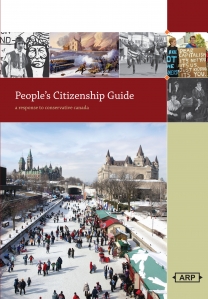
Tonight, at McNally Robinson [please click for event information] in Winnipeg, The People’s Citizenship Guide: A Response to Conservative Canada will be launched.  This short 80-page book is a direct response to Citizenship and Immigration Canada’s Discover Canada: The Rights and Responsibilities of Citizenship, which has been widely critiqued for its restrictive and overly-politicized definition of Canadian identity (for examples or critiques see the Globe and Mail, Andrew Smith’s blog, my summary of initial reactions on AH.ca, Ian McKay’s podcast on the right-wing reconception of Canada). As in the official immigration guide, The People’s Citizenship Guide’s editors, historians Esyllt Jones and Adele Perry, have brought together a diverse group of scholars in order to succinctly reflect on the nature of Canadian citizenship and modern-day Canada. Continue reading “The People’s Citizenship Guide”

Music as a Gateway to Understanding Historical Practice

By Matenadaran [Public domain], via Wikimedia Commons

This piece was originally published on ActiveHistory.ca.

In the mid-1990s, the music of the Wakami Wailers set me on the path to becoming a historian.  Singing the old songs from eastern Canada’s nineteenth-century lumber shanties, this group of former Ontario Parks workers instilled in me a sense of the past and its importance for understanding present realities.  By connecting some of Ontario’s premier provincial parks and province’s lumber industry, the Wailers encouraged me to consider the complex interconnection between logging and recreation in central Ontario (i.e. Muskoka and Algonquin Park).

I have come to realize over the decade and a half since I first discovered the Wailers that popular music can serve as a useful entry point for understanding the past.  This should not come as a surprise.  Approaches to teaching and learning, such as John Bigg’s SOLO taxonomy, emphasize the importance of understanding foundational concepts before higher order thinking can take place.  Popular culture serves as an easy way to establish these concepts by capitalizing on students’ everyday experience.

Music can be used to teach about the past in at least seven overlapping ways (feel free to add other categories and examples in the comments section): Continue reading “Music as a Gateway to Understanding Historical Practice”

Museum Closures, Heritage and Cultivating a Sense of Place in Toronto

This piece was originally published on ActiveHistory.ca.

“Places possess a marked capacity for triggering acts of self-reflection, inspiring thoughts about who one presently is, or memories of who one used to be, or musings on who one might become… When places are actively sensed, the physical landscape becomes wedded to the landscape of the mind, to the roving imagination, and where the latter may lead is anybody’s guess.” – Keith Basso, Wisdom Sits in Places, 107.

Just as I read these words last week, the Toronto Star disclosed municipal plans to close three of the City of Toronto’s ten museums.  Montgomery’s InnGibson House and the Zion School House – museums outside of the downtown core and closely allied with the Etobicoke and North York Historical societies – are on the chopping block due to municipal cutbacks.  This decision builds on the recently announced closure of the Air and Space Museum at Downsview Park, one of a few other museums in the north end of the city.

In an age of austerity, as Sean Kheraj noted last week, all public institutions supporting culture and heritage are vulnerable. But these cuts do not just reflect cutbacks in the culture and heritage sectors. In a city already bereft of recognized historical sites outside of the downtown core, this municipal decision reinforces urban and suburban differences in how Toronto’s past is told. If places have the power to shape our self-perception and how we situate ourselves in the world, as Basso and others have suggested, how has the uneven distribution of historical places influenced the culture and politics of Canada’s largest city? Continue reading “Museum Closures, Heritage and Cultivating a Sense of Place in Toronto”

The Return of the History Wars

This piece was originally published on ActiveHistory.ca.

Last week a story in Le Devoir caught my attention.  The headline read: ‘Quebec’s history has been left behind by the universities.’  The article reports on a study lamenting the quality and quantity of history-specific training in Quebec universities.  More importantly – and this is what caught my attention – the spokesperson for one of the study’s sponsors, the Coalition for the History of Quebec, argued that the teaching of political and economic history had been subsumed by an over emphasis on social and culture history.  After reading this critique of Quebec’s university history departments, I realized that the so-called ‘History Wars’ are still alive and well in the Canadian public sphere. Continue reading “The Return of the History Wars”

Renaming Schools: A society in dialogue with its past

After a six month hiatus to put the finishing touches on my dissertation and have a baby, I have re-entered the blogosphere.  This appeared on ActiveHistory.ca earlier this week.

It should come as no surprise that the recent controversy over the renaming of a junior high school erupted in Nova Scotia.  On 22 June 2011, the Halifax Regional School Board voted unanimously to change the name of Cornwallis Junior High.  The school board was concerned about the legacy of Edward Cornwallis, the city’s founder, who in an effort to secure the town site placed a bounty on Mi’kmaq heads.  The board’s decision has caused considerable controversy and according to the media it seems that many people want the school’s name retained.  The changing of the school’s name, however, fits within a long history of name changes in Nova Scotia.  It presents a good opportunity to reflect on the diverse roots that make up Nova Scotia’s population and the province’s relationship with its past.  Renaming landmarks is a sign of a growing and evolving society that is in critical dialogue with its past. Continue reading “Renaming Schools: A society in dialogue with its past”

Building Digital Literacy and the University Curriculum

This post was originally published on ActiveHistory.ca and Teaching the Past.

The digitization of information, and the growing technologies used to manipulate and analyze it, is rapidly changing the context of the classroom. A couple of weeks ago Ian Milligan, one of my fellow editors at ActiveHistory.ca, reported on the growing debate over the use of laptops and other technology (like cell phones) during class time.  Milligan makes a compelling argument for the importance of allowing students the use of their computers in the lecture hall. Although I agree with much of what he has written on the subject, the use of technology in history courses poses a more complicated problem than simply addressing whether it should or should not be used: Where does digital literacy fit in the university curriculum and how should it be taught? Continue reading “Building Digital Literacy and the University Curriculum”

Strengthening Community through Digitized Local History

This piece was originally published on ActiveHistory.ca.

The most common question I get when people ask where I live is: “Why are you still living there?” I live near Jane-Finch and York University in Toronto, a neighbourhood better known for its crime and distance from key services than its rich cultural and community life. Over the past five-and-a-half years, however, I have learned that my neighbourhood’s bark is worse than its bite. I like where I live and a recent Toronto Public Library history project does a really great job at demonstrating some of the reasons why. Continue reading “Strengthening Community through Digitized Local History”

Remembering Francis: Sharing life and sharing the past

This post was originally published on ActiveHistory.ca

On Friday night I sat down at my computer to write out a post for this morning and nothing came.  Last week was a busy week for me and it was filled with a number of surprises (some pleasant, some less so).  One of the major events of the week was the death of my friend Francis. Continue reading “Remembering Francis: Sharing life and sharing the past”

Hands-on History: Are the archaeologists leading the way to a new mode of public engagement?

This post was originally published on ActiveHistory.ca

I have a confession.  As much as I love being a historian, I am not a huge fan of spending most of my day sitting at a desk reading.  Some days I am pretty sure that I can feel my fat cells multiplying and the muscle cells slowly decaying.  Most days I long to literally practice active – blood-flowing – history.  About seven ago, I tried to remedy this challenge by becoming involved in archaeology.  After a couple of brief glimpses into an archaeologist’s world, I found myself challenged by the practices of the discipline and increasingly by the way in which the programs of which I was a part engaged the public. Continue reading “Hands-on History: Are the archaeologists leading the way to a new mode of public engagement?”

Historical Preservation in Comparative Perspective

This post was originally published on ActiveHistory.ca

Last week, two media items caught my attention.  The first story was the discovery of remains from an 18th-century ship found during construction at the World Trade Centre in New York City.  The second was a short debate on CBC’s Metro Morning between Toronto City Councillors Mike Feldman and Adam Vaughan on heritage designation of historic homes. Continue reading “Historical Preservation in Comparative Perspective”

Conversation, Contradiction and Conflict in ‘The Historical Present’

This post was originally published on ActiveHistory.ca

A couple of days ago Christopher Moore posted British historian Richard Overy’sThe Historical Present” from The Times Higher Education on his blog.  This short reflection captured my attention because of the dichotomy that Overy makes between academic, policy-oriented and popular histories.   Splitting history up into these categories misrepresents the value and purpose of practicing history and fails to acknowledge many of the contributions that shape the discipline as a whole. Continue reading “Conversation, Contradiction and Conflict in ‘The Historical Present’”